Psychopedagogy
What Is Learning and How Do We Really Learn?
8 min
hen we think about learning, our minds usually go straight to one idea: learning is a process that takes place in the brain. We think about memorizing, understanding, studying, solving problems, and acquiring new knowledge.
But have we ever stopped to ask ourselves whether we truly learn with our minds alone?
From the perspective of positive educational psychology, we understand that learning involves three essential dimensions: the mind, the heart, and the body.
Not one in isolation, and not one without the others. All three are connected and play an active role in our ability to learn.
Starting from this perspective, it becomes much easier to understand why a child experiencing an emotional storm may struggle to learn something new. Their mind may be physically present in the classroom, but much of their attention is occupied with trying to process what they are feeling.
Likewise, we might ask ourselves what opportunities a child has to learn when they spend most of their school day sitting at a desk, without enough opportunities to move, experiment, or actively engage their body in the learning process.
So, if learning is not simply about listening, reading, or memorizing information, what actually happens when we learn?
The Five Mental Gestures of Learning
Within the framework of positive educational psychology, we can understand learning through five fundamental actions known as mental gestures. Each one plays a specific role and contributes to our ability to acquire, process, and use new knowledge.
Understanding these gestures helps us recognize how we learn and, more importantly, what we can do to support this process.
1. Attention: Receiving Information
Attention is our ability to perceive what comes to us from the outside world through our senses. It is our first point of contact with information.
To learn, we need to be available to observe, listen, touch, experiment, and discover. Without attention, it is difficult to begin a meaningful learning process.
2. Understanding: Making Connections
Understanding does not simply mean listening to an explanation or repeating a definition. It means establishing connections between new information and what we already know.
It is when we begin to make sense of what we are learning, relate it to previous experiences, and build new knowledge.
3. Memorization: Storing Information for Future Use
Memorization allows us to build a repertoire of knowledge that we can draw upon later.
It is not simply about repeating information until we remember it. Memory allows us to retain facts, concepts, and experiences that we can retrieve and use in different situations.
4. Reflection: Thinking Based on What We Know
Reflection involves taking a step back, analyzing, questioning, and making new connections based on our knowledge and experiences.
We cannot reflect deeply on something we know absolutely nothing about. We need prior information and knowledge that allow us to develop our own thinking.
5. Imagination: Opening Up New Possibilities
Imagination allows us to go beyond what we already know. It is the ability to explore possibilities, find different solutions, make unexpected connections, and create new paths.
It is through imagination that we move beyond simply reproducing what we have learned and begin using our knowledge in new ways.
These five mental gestures do not necessarily work in a linear or isolated way. They complement and continuously reinforce one another. Understanding how they contribute to learning allows us to provide children with tools that strengthen each of them.
But for these gestures to develop, we need to look at learning through its three essential dimensions.
Learning with the Mind, the Heart, and the Body
1. Learning with the Mind
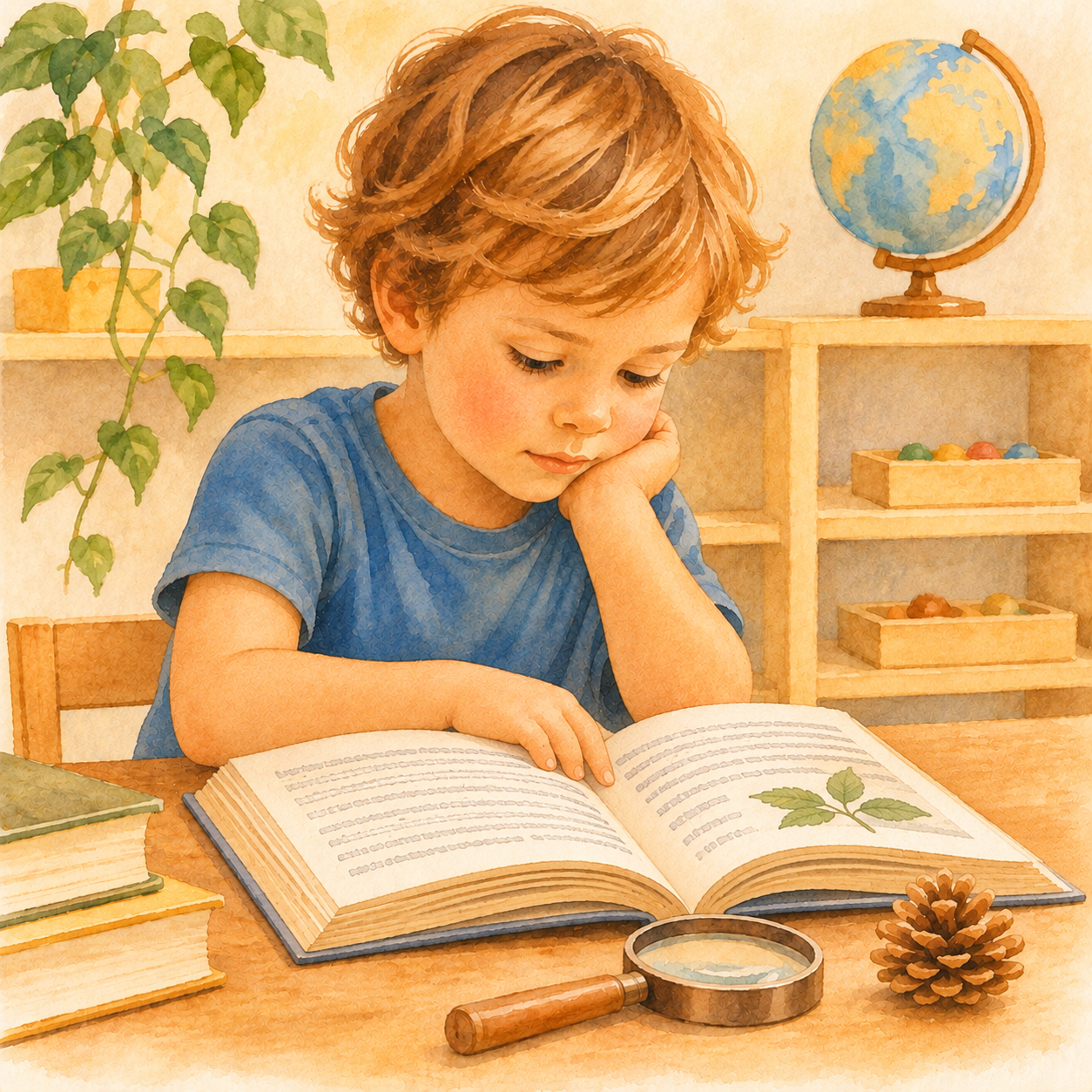
When we understand how our brain works and how we process information, we can better prepare ourselves to learn.
One of the first things we need to do is establish clear goals.
We do not always learn with the same intention. Sometimes we need to memorize information; at other times, we need to understand a concept, develop a skill, learn how to do something, or apply our knowledge to a particular situation.
Identifying what we want to achieve helps us choose more effective strategies.
It is also important to use tools that strengthen the five mental gestures: observation activities, association exercises, mind maps, memory games, reflection activities, and experiences that stimulate imagination.
The goal is not to study for more hours, but to learn how to make better use of our abilities.
2. Learning with the Heart
We may have a prepared mind, a good learning environment, and all the tools we need. However, our emotions also have a profound influence on the learning process.
Imagine a child arriving at school feeling worried, sad, frustrated, or angry because of something that happened at home. Even if the teacher begins explaining a lesson, the child may struggle to pay attention because emotionally, they are occupied with something else.
Emotions can support learning, but they can also make it more difficult when they are intense and we do not yet know how to manage them.
That is why it is essential to learn to recognize our emotions, give them space, and understand what they are trying to communicate.
The goal is not to eliminate uncomfortable emotions or ask a child to stop feeling sad or angry before they can begin working. It is to accompany them as they learn to identify what they feel, express it, and find tools that help them regulate their emotions.
When we learn to develop a healthy relationship with our emotions, we stop seeing them as enemies and begin turning them into allies.
Children need to feel emotionally safe in order to open themselves up to new learning experiences.
3. Learning with the Body
Learning does not depend solely on having our minds and emotions ready. Our bodies also need to participate.
Sometimes we forget simple things, such as drinking enough water, getting some rest, taking a deep breath, or allowing ourselves to spend a few minutes outdoors.
Small actions can help us regain our energy and improve our readiness to learn.
But the body's participation goes far beyond that.
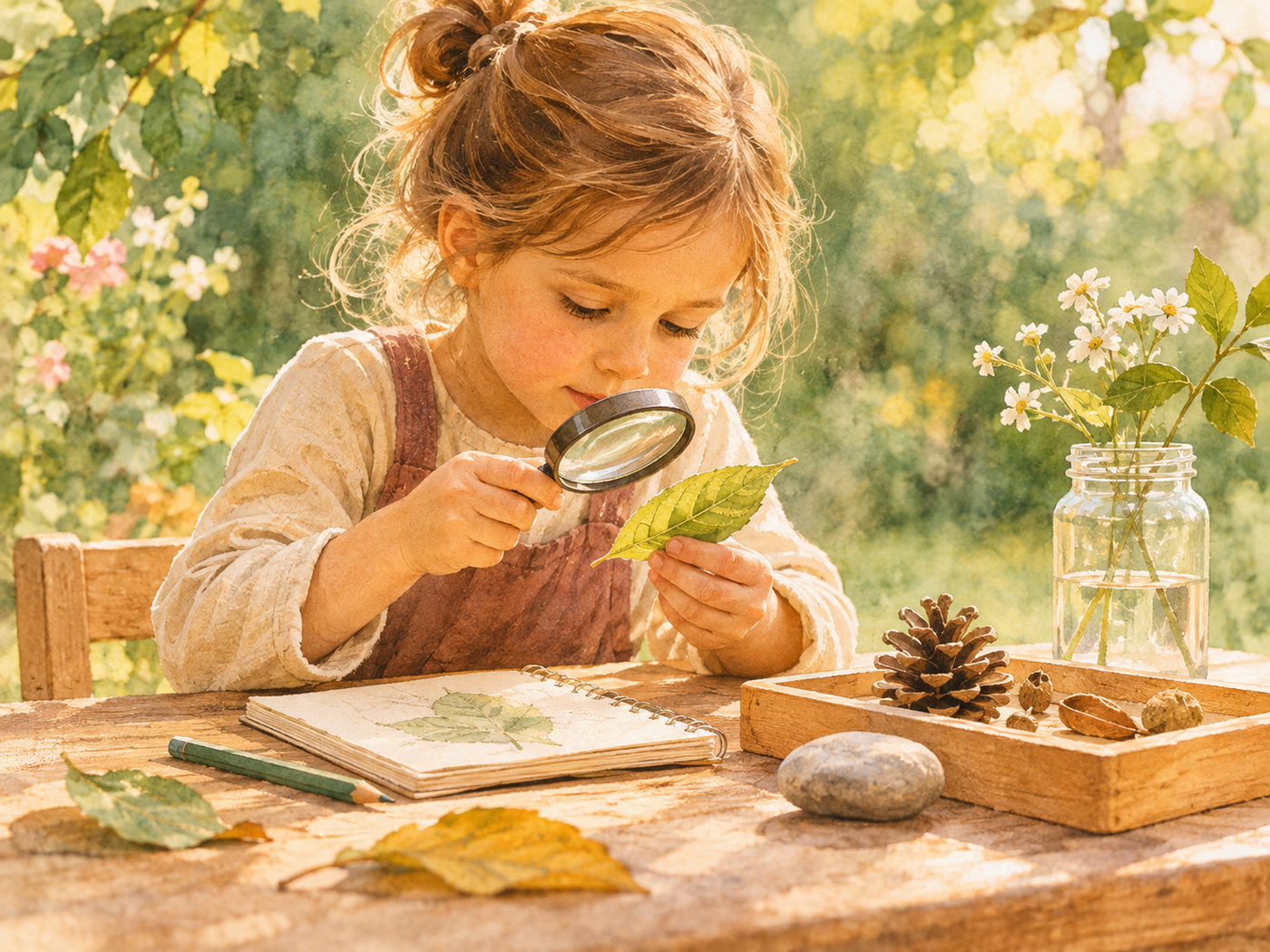
Movement, hands-on exploration, and manipulation allow children to make connections between what they see, hear, and do. When they can experiment with their hands, move around, build, touch, and transform objects in their environment, learning becomes much more concrete.
This is where educational approaches such as Montessori become particularly meaningful.
In a Montessori environment, children are not limited to listening to explanations or remaining seated throughout the day. They have opportunities to manipulate materials, experiment, move freely within clear boundaries, and construct knowledge through experience.
The body is not separate from learning. It is one of the fundamental tools through which children discover and understand the world.
And What About Us, the Adults?
There is something I find particularly important to highlight.
When we begin our training as educators, we study pedagogy, teaching methods, child development, and different learning theories. However, we do not always explore one fundamental question deeply enough: How do we actually learn?
As adults, we have a responsibility to keep informing ourselves, questioning our assumptions, and learning about the processes involved in children's development.
But we also need to understand ourselves as learners.
How does our attention work? What helps us memorize? What happens when our emotions overwhelm us? Do we need movement to understand something better? Which strategies work for us, and which ones do not?
Because before asking ourselves how to teach a child to learn, perhaps we should pause and understand how we learn ourselves.
If we do not understand our own learning processes, how can we truly expect to support those of children?
Education is not simply about transmitting knowledge. It also means understanding the person who is learning, respecting their needs, and providing the tools they need to develop their full potential.
What Comes Next…
In the upcoming articles, I will explore each of these topics in greater depth.
We will discuss the five mental gestures, the tools and strategies we can put into practice to strengthen them, and how to support learning through our three dimensions: the mind, the heart, and the body.
My intention is to share resources and reflections that help us better understand how children learn, while also encouraging us to question some of our own practices as adults and educators.
Because learning should not be reduced to accumulating information, completing exercises, or passing exams.
Learning means understanding, making connections, experimenting, feeling, reflecting, and discovering new possibilities.
And to truly support this process, we first need to understand it.
Recommended Reading
If you are interested in discovering more about positive educational psychology and understanding learning from a broader perspective, I particularly recommend two books by Isabelle Pailleau:
Apprendre autrement avec la pédagogie positive.
J'élève mon enfant du mieux que je peux... et c'est déjà bien !.
These books encourage us to question the way we teach, support, and understand the learning process.