
Autonomy & independence
What Does Autonomy Really Mean in a Child?
Many adults confuse autonomy with letting children do whatever they want. However, to truly understand autonomy, we must first understand what it means.
8 min
utonomy is the ability to regulate one's own behavior based on rules that arise from within oneself. This helps us understand that autonomy does not develop spontaneously; it is built over time and is one of the great potentials of the human being.
But then… How is it developed?
The development of autonomy involves a profound inner process within the child. It is a process through which children build themselves. In Montessori philosophy, we understand that the child is not an empty vessel that the adult must fill, but an active being who participates in their own development.
The environment also plays an essential role in this process. Adults are responsible for providing a rich, engaging, and carefully prepared environment that responds to the child's needs. Both at home and at school, spaces should be adapted to allow children to act independently and develop their independence.
Allowing a child to do whatever they want when they have not yet developed their will is not freedom; in fact, it betrays the true meaning of freedom. This is why the idea that children in Montessori environments “do whatever they want” is a myth that is completely at odds with the philosophy.
The adult's role is to observe, understand, and guide the child so that they learn to use objects for their intended purpose. This guidance helps children develop their own mental order.
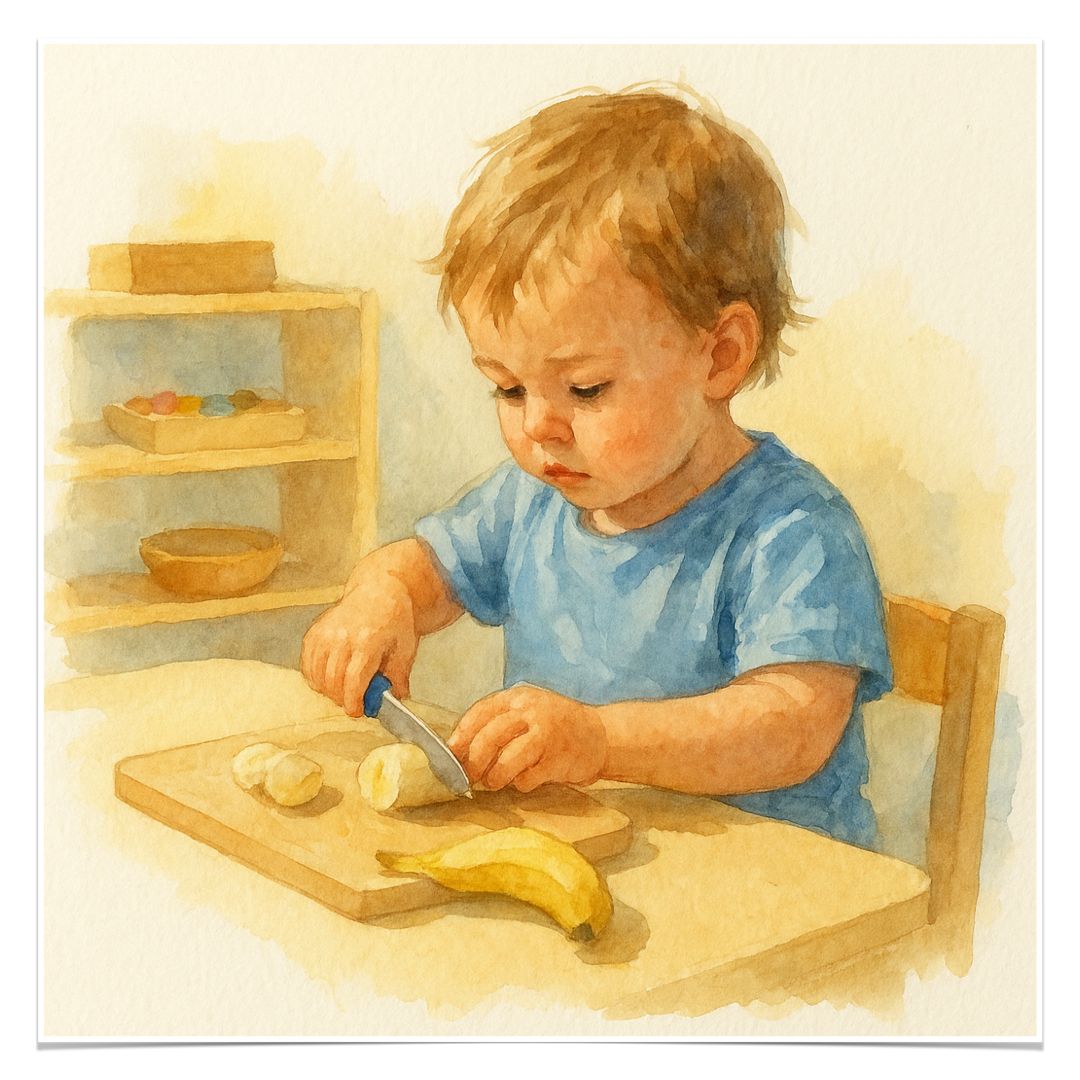
A simple everyday example can help us understand this better. Imagine a child picking up a knife to play with it. It may sound absurd, but similar situations occur frequently. The answer is not to allow objects to be used in any way the child chooses, but to show them their actual purpose.
For example, an adult can teach the child how to use an age-appropriate knife to cut fruit safely. In this way, the child discovers that every object has a purpose and learns to use it meaningfully. Providing children with appropriate work is essential. The child's mind has a constant need for activity. Engaging children in meaningful and healthy tasks is a genuine exercise in inner development.
When we allow children to use the objects in their environment consciously and purposefully, we begin to observe something wonderful: spontaneous discipline, mental clarity, and a deep sense of inner satisfaction emerge. It is through this process that children move toward what Maria Montessori called normalization.
What Does an Autonomous Child Look Like at Home?
For a child to develop autonomy at home, we must first remember something fundamental: autonomy does not emerge in a vacuum. It requires a prepared environment.
The home should be adapted to the child's needs. Low shelves, safe supports for working in the kitchen, a wardrobe where children can access their own clothes, and an environment characterized by order and beauty all help. When the environment is prepared, children have genuine opportunities to act independently.
A very concrete example is access to clothing. Children need a wardrobe adapted to their height so they can choose, take out, and put away their clothes without depending on an adult. This simple change transforms their relationship with getting dressed: it becomes a decision rather than something entirely imposed on them.
However, there is something even more important than the environment: the adult's patience.
It takes less time to choose a child's clothes, take them out of the wardrobe, and dress the child than it does to allow the child to complete these steps independently. In a society where everyone seems to be in a constant hurry, adults often intervene to “save time.”
But the time we think we are saving may actually become a missed opportunity for the child's development.
Getting dressed is, in fact, a complex task. It involves coordination, concentration, and will. That is why it is essential to patiently demonstrate how to button clothes, zip up a jacket, tie knots, and put on shoes. The goal is not to demand perfection, but to accompany the child throughout the process.
And yes, their outfit might not match.
And that's okay.
Because they are not simply playing at getting dressed; they are developing their own preferences and judgment.
Autonomy is also built through small, everyday gestures.
In the kitchen, for example, children can begin participating from an early age when the environment allows it. Using child-appropriate knives and starting with soft foods such as bananas helps develop coordination, confidence, and a meaningful connection with everyday life. This is not play for the sake of play; it is real life adapted to the child's abilities.
Pouring water is another valuable exercise. Offering small pitchers and little glasses allows children to practice without fear. At first, there will be spills, of course. But mistakes are part of learning. With repetition, accuracy gradually improves.
The home is also a place where responsibility is shared.
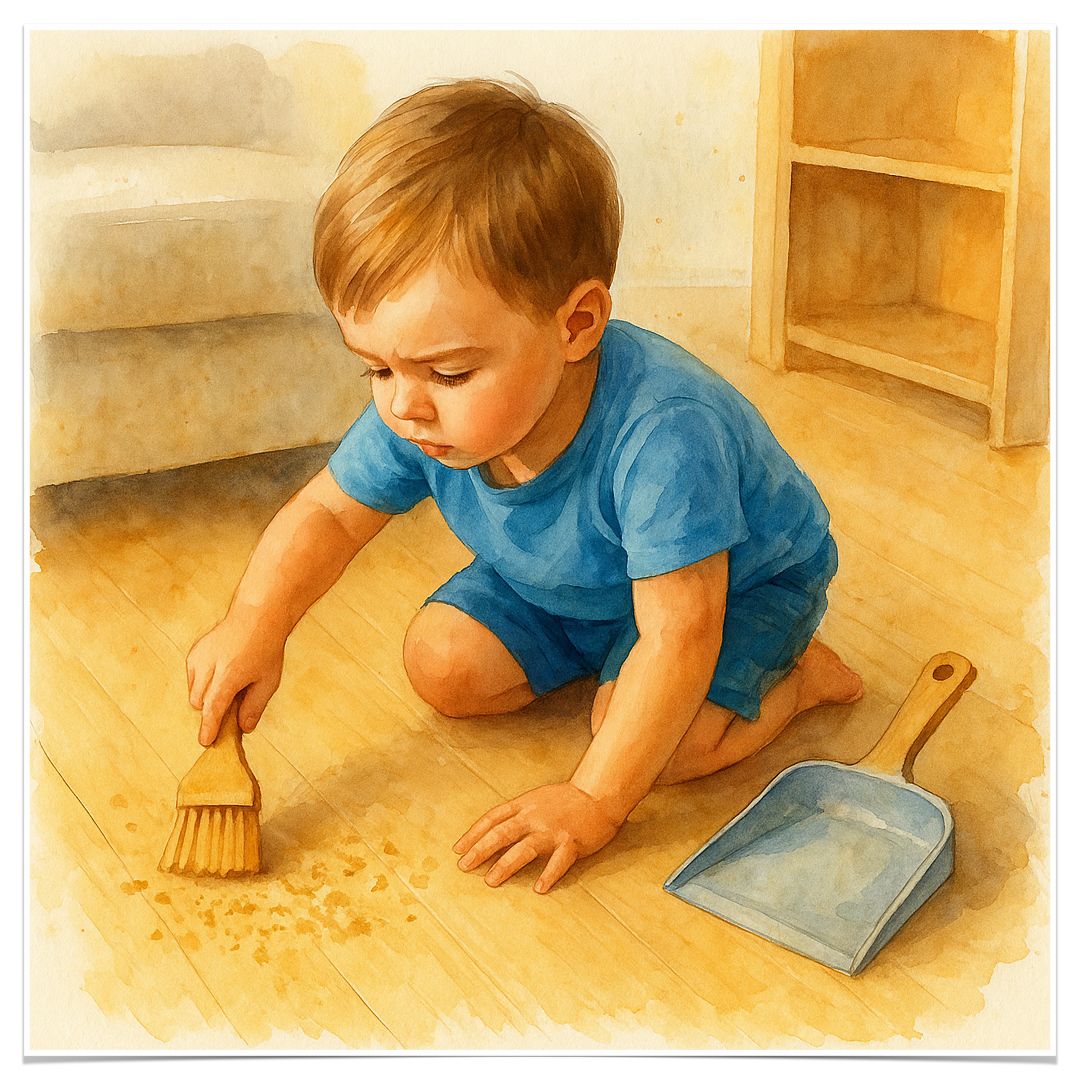
When children have access to tools adapted to their size—a small broom, a dustpan and brush, or a small mop—they can actively participate in caring for their environment. Not as an imposed obligation, but as a natural way of belonging.
Hanging laundry, cleaning their shoes, setting the table, and putting their belongings away are simple actions that, repeated over time, build something much greater: a sense of responsibility.
To support this process, children need clear and accessible places for their belongings. Being able to put away their toys independently is essential. Ideally, there should be a manageable number of toys, well organized and made from natural materials such as wood, which can encourage care and order.
There are also choices adults make that have a significant impact on this process.
Reducing or avoiding screen time allows children to connect with the real world, with their hands, their bodies, and their surroundings. Autonomy is not built by watching; it is built by doing.
And in the middle of all this, there is something we must not forget: contact with nature.
Allowing children to get dirty, explore, touch the earth, and observe the world around them is not a luxury; it is a fundamental opportunity for learning. It is through these experiences that children connect with the world in an authentic way.
As adults prepare the environment, guide children patiently, and trust the process, children begin to grow and transform.
Little by little, genuine self-discipline emerges.
A quiet sense of confidence.
The ability to act without constantly depending on an adult.
This is how something much deeper than a practical skill begins to develop: the formation of a capable, responsible human being who is aware of their place in the world.
And most importantly: Even if a child does not attend a Montessori school, this development is possible.
Autonomy does not belong to a particular method. It begins with the way adults see and respect the child.
What Does an Autonomous Child Look Like at School?
When a child develops autonomy in everyday life, this ability does not remain confined to the home. Autonomy becomes part of the way children relate to the world, and it naturally carries over into the school environment.
Many people believe that autonomy can only develop in a Montessori environment. However, although the environment has a significant influence, the autonomy developed at home accompanies children wherever they go. Even in traditional school systems, we can observe children who have had opportunities to develop their independence.
An autonomous child often displays certain attitudes that reflect inner confidence and organizational skills.
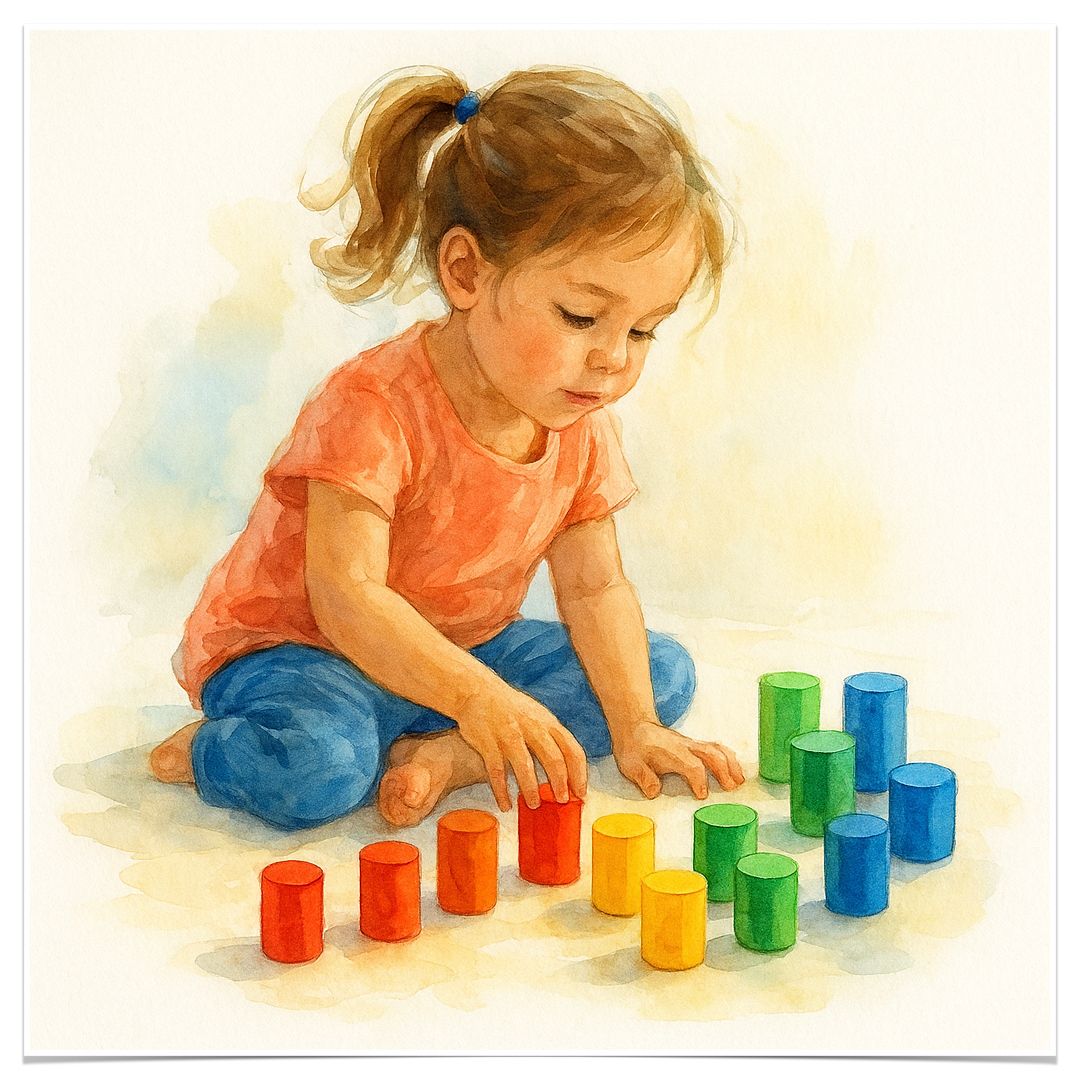
For example, they can prepare their learning materials, organize their workspace, and take responsibility for their belongings. They know how to put things away, care for the objects they use, and understand that these objects are part of a shared environment.
They also try to solve small problems before immediately asking for help. This does not mean they never need an adult. Rather, they have learned to think first, try independently, and ask for help when they genuinely need it.
Another important characteristic is perseverance. A child who has developed autonomy is accustomed to trying several times before giving up on a task. Through experience, they have learned that making mistakes is part of the learning process.
These children often develop a more peaceful relationship with their work. They can concentrate on an activity for a period of time, follow instructions, finish what they start, and feel satisfied with the effort they have made.
In a Montessori environment, these attitudes are encouraged through freedom within limits, self-correcting materials, and a prepared environment that allows children to act independently. However, when autonomy is also nurtured at home, these qualities can emerge in any educational setting.
A child who participates in household responsibilities, has opportunities to make decisions, and learns to care for their surroundings arrives at school with a strong foundation.
They feel capable.
They trust their own abilities.
And they understand that their actions have an impact on the world around them.
In this sense, autonomy does not depend solely on an educational method. It is a profound developmental process that grows from the trust adults place in children.
When adults allow children to try, explore, make mistakes, and try again, they are cultivating something far more important than an academic skill: they are helping to shape a person who trusts themselves and can act responsibly within society.
And ultimately, this is one of the most important goals of education:
To nurture human beings who are capable, aware, and free.